
Canada’s expanding online gambling industry presents unprecedented public health career opportunities for international medical graduates (IMGs), particularly as provinces legalize and regulate digital gaming platforms. As operators like Moonbet establish themselves—you can sign up here to understand the user experience—the demand for medical professionals who can address gambling-related harms has surged dramatically.
Public health units across Ontario, British Columbia, and Alberta are actively recruiting physicians with expertise in addiction medicine, epidemiology, and community health to develop responsible gambling frameworks. These positions offer IMGs a strategic pathway into Canada’s healthcare system without requiring full clinical licensure initially, focusing instead on program development, harm reduction strategies, and population health surveillance.
The work directly addresses a growing crisis: approximately 3% of Canadians experience moderate to severe gambling problems, with online platforms accelerating accessibility and risk. Your medical training positions you uniquely to contribute evidence-based interventions, collaborate with regulatory bodies, and shape provincial policies that protect vulnerable populations.
Integrating IMGs into Canada‘s public health infrastructure has proven successful, with many physicians transitioning from these roles into full clinical practice. This emerging field combines your medical expertise with meaningful population-level impact, offering mentorship through established public health networks and clear advancement pathways. Whether you’re awaiting residency matching or seeking alternative medical careers, responsible gambling initiatives provide immediate opportunities to serve Canadian communities while building your professional credentials.
Understanding Canada’s Online Gambling Landscape and Public Health Challenge

The Scale of Online Gambling in Canada
Canada’s online gambling landscape has experienced remarkable expansion in recent years, creating urgent public health concerns that require medical expertise. Following provincial regulatory changes, the online gambling market has grown exponentially, with over 6 million Canadians now participating in online betting activities. Current prevalence studies indicate that approximately 2-3% of Canadian adults meet criteria for problem gambling, translating to roughly 600,000 to 900,000 individuals experiencing gambling-related harm.
The shift from traditional to digital platforms has intensified accessibility concerns, as online casinos and sports betting sites operate 24/7 through smartphones and computers. This constant availability has particularly impacted younger demographics, with emerging research showing increased participation rates among individuals aged 18-35. The financial impact is substantial, with Canadians wagering billions annually through digital platforms.
These troubling trends have positioned responsible gambling as a priority public health issue requiring specialized medical intervention. Healthcare systems across provinces are actively seeking physicians, particularly those with public health training, to develop prevention programs, screening protocols, and treatment pathways. For international medical graduates, this represents a meaningful opportunity to contribute expertise in an underserved area where your skills can directly address a growing societal challenge while establishing your career in Canada’s evolving healthcare landscape.
Why Public Health Physicians Are Essential
Public health physicians bring unique expertise to address gambling-related harms because this issue sits at the critical intersection of multiple health domains. Understanding sports betting’s mental health impact requires knowledge of addiction medicine, psychiatric conditions like anxiety and depression, and the social determinants that increase vulnerability to gambling disorders.
As an IMG, your training in population health management positions you perfectly for this emerging field. Public health physicians don’t just treat individual patients—they design prevention programs, analyze community-level data, and create policies that protect entire populations. In responsible gambling, this means identifying at-risk groups, developing early intervention strategies, and collaborating with regulators to implement safer gambling practices.
Your background also equips you to address the cultural and socioeconomic factors that influence gambling behavior across Canada’s diverse communities. Many IMGs bring valuable perspectives on how different populations engage with gambling, which strengthens prevention efforts. With mentorship from established public health leaders, you can quickly adapt your skills to Canada’s regulatory environment while making meaningful contributions to this growing priority area.
Public Health Roles Available for IMGs in Responsible Gambling
Provincial and Territorial Health Authority Positions
Provincial and territorial health authorities across Canada offer meaningful opportunities for IMGs to contribute to gambling harm prevention initiatives. These government-funded positions focus on developing and implementing evidence-based programs that protect communities from gambling-related harms, particularly as online gambling expands.
Public health physicians in these roles design population-level interventions, analyze gambling harm data, and collaborate with addiction services to create comprehensive prevention strategies. You’ll work alongside multidisciplinary teams including epidemiologists, health promotion specialists, and community outreach coordinators. Many positions involve policy development, helping shape regulations that balance economic interests with public safety.
IMGs bring valuable perspectives to these roles, often drawing from diverse healthcare experiences that enrich program design. Dr. Amira Hassan, an IMG from Egypt now working with Alberta Health Services, developed culturally sensitive gambling harm resources that significantly improved community engagement rates. Her success demonstrates how international training enhances Canadian public health capacity.
These positions typically require Canadian medical licensure and may prefer candidates with public health training or certification. Entry-level opportunities exist through medical officer of health roles, providing excellent mentorship from experienced Canadian public health professionals. The collaborative environment helps IMGs integrate into the Canadian healthcare system while addressing a growing public health priority that affects millions of Canadians annually.
Research and Policy Development Opportunities
For IMGs with research interests, responsible gambling presents rich opportunities to contribute to Canada’s emerging public health landscape. Academic institutions and public health agencies actively seek researchers who can bring diverse perspectives to understanding gambling behaviors across different populations.
Research positions range from postdoctoral fellowships examining gambling addiction neurobiology to epidemiological studies tracking online gambling patterns among vulnerable groups. Your international background can offer unique insights into cross-cultural gambling behaviors, particularly valuable as Canada’s online gambling market expands.
Policy development roles exist within provincial health ministries, regulatory bodies like the Canadian Gaming Association, and organizations such as the Centre for Addiction and Mental Health. These positions involve translating research findings into actionable public health strategies, developing harm reduction frameworks, and advising government on regulatory measures.
Dr. Anita Sharma, an IMG from India, successfully transitioned into gambling research at a Toronto university after completing her public health residency. She now leads a team investigating problem gambling among newcomer communities, combining her clinical expertise with her understanding of cultural factors influencing gambling behaviors.
These roles typically require additional qualifications such as a Master’s in Public Health or epidemiology. Many institutions offer mentorship programs connecting IMGs with established researchers, providing guidance on grant applications and publication strategies while building your Canadian academic network.
Clinical and Community-Based Roles
IMGs can make meaningful contributions through direct patient care roles in Canada’s emerging responsible gambling initiatives. Addiction clinics across provinces are actively recruiting physicians with diverse cultural backgrounds to address problem gambling within immigrant communities. These positions offer valuable mentorship from Canadian-trained addiction specialists who understand the unique challenges you face as an IMG.
Community health centers provide excellent entry points, particularly those serving multicultural populations where your language skills and cultural competence become significant assets. Many successful IMGs have transitioned into these roles after completing brief orientation programs in Canadian addiction medicine practices.
Specialized gambling treatment programs, including residential facilities and outpatient services, increasingly recognize the value IMGs bring to interdisciplinary teams. Dr. Priya Sharma, an IMG from India, now leads a gambling intervention program in Ontario after starting as a staff physician, demonstrating clear advancement pathways.
These clinical roles typically require provincial medical licensure and may benefit from additional certification in addiction medicine. The hands-on experience you gain directly treating patients affected by gambling disorders builds essential expertise while establishing your professional network within Canada’s public health system. Your unique perspective as an IMG enriches treatment approaches and improves outcomes for diverse patient populations struggling with gambling-related harms.
Qualifications and Pathways for IMGs to Enter This Field
Essential Canadian Medical Licensing Requirements
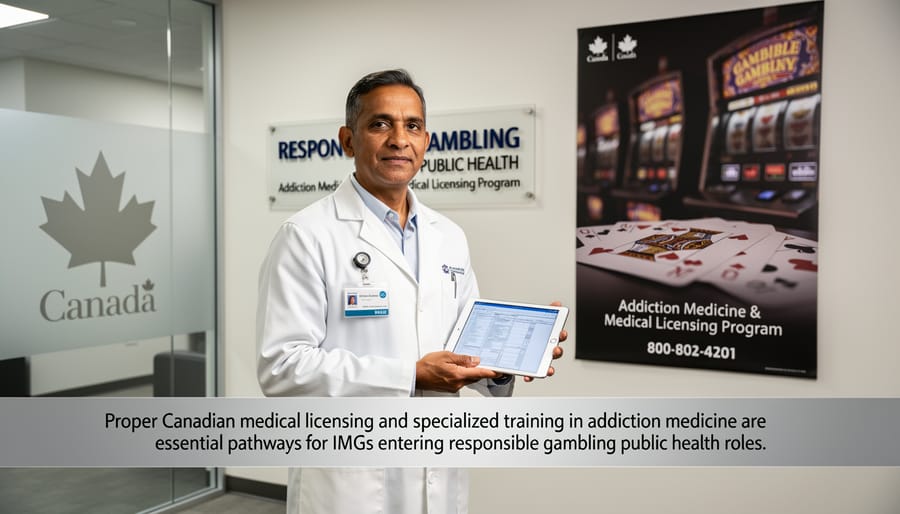
Entering public health roles in responsible gambling requires you to navigate the Canadian medical licensing requirements systematically. Your journey begins with the Medical Council of Canada Evaluating Examination (MCCEE), which assesses your basic medical knowledge and serves as your entry point into the Canadian licensing process.
Following the MCCEE, you’ll complete the National Assessment Collaboration (NAC) Objective Structured Clinical Examination (OSCE), which evaluates your clinical skills through standardized patient scenarios. This practical assessment demonstrates your readiness to practice medicine in Canadian healthcare settings. Many successful IMGs recommend practicing with study groups to build confidence for this interactive examination.
Each province maintains distinct licensing requirements through regulatory bodies like the College of Physicians and Surgeons. For public health positions in responsible gambling, some provinces may offer alternative pathways that recognize your specialized training and experience. Research shows that IMGs with public health backgrounds often transition smoothly into these roles, as your diverse international experience brings valuable perspectives to addressing gambling-related health concerns. Connect with IMG mentorship programs early to navigate these requirements efficiently and learn from colleagues who’ve successfully completed this journey.
Specialized Training in Addiction Medicine and Public Health
Strengthening your profile for responsible gambling public health roles involves targeted education beyond your medical degree. Consider pursuing addiction medicine certifications offered through the Canadian Society of Addiction Medicine (CSAM), which provides fellowship programs recognized across provinces. These credentials demonstrate specialized knowledge in behavioral health and substance use disorders, directly applicable to gambling addiction treatment.
Public health certifications, such as those from the Canadian Public Health Association, equip you with population-level intervention strategies essential for developing gambling harm reduction programs. Many universities offer graduate certificates in public health that can be completed part-time while fulfilling licensing requirements.
Dr. Amara Okafor, an IMG from Nigeria, completed an online certificate in behavioral addictions through the University of British Columbia while preparing for her medical licensing exams. This additional qualification helped her secure a public health consultant position with a provincial gaming authority within months of obtaining her license. Her success demonstrates how strategic upskilling creates competitive advantages.
Consider mentorship opportunities through organizations like the Centre for Addiction and Mental Health, which connects IMGs with established professionals in addiction medicine. These relationships provide invaluable guidance on navigating Canada’s healthcare landscape while building your expertise in this specialized field. Many mentors can also recommend relevant training programs aligned with emerging responsible gambling initiatives.
Bridging Programs and Alternative Pathways
While working toward full licensure, IMGs can make valuable contributions to responsible gambling initiatives through various bridging opportunities. Research assistant positions allow you to contribute to gambling addiction studies and public health data analysis, building Canadian experience and professional networks. Community health organizations often welcome physicians in supervised roles, conducting health promotion workshops or developing culturally appropriate education materials for diverse populations affected by gambling harm.
Many provincial health authorities offer observer or clinical assistant positions where you can participate in assessment and counseling under supervision. These roles provide insight into Canadian healthcare delivery while addressing the growing need for gambling harm prevention expertise. Volunteer positions with addiction services or mental health organizations also demonstrate commitment to public health and help you understand local approaches to harm reduction.
Explore IMG integration pathways that connect your existing skills with emerging public health needs. Success stories show IMGs who started in research or community roles eventually transitioned to clinical practice, bringing valuable cross-cultural perspectives to responsible gambling work. These bridging experiences strengthen your Canadian credentials while allowing meaningful contribution to this critical public health challenge.
Why This Career Path Offers Unique Advantages for IMGs
Less Competitive Than Traditional Clinical Pathways
Navigating Canada’s medical system as an IMG can feel overwhelming, especially when facing the intense competition for traditional residency positions. However, public health and addiction medicine roles in responsible gambling offer a more accessible alternative pathway. These positions often don’t require completion of a Canadian residency program, instead valuing your existing medical training combined with additional public health qualifications or certifications in addiction medicine.
Many public health units and addiction treatment centers recognize the global expertise IMGs bring and actively seek physicians with diverse backgrounds. Unlike residency programs with limited spots and high rejection rates, these roles frequently have growing demand due to the expanding online gambling landscape in Canada. Several IMGs have successfully transitioned into these positions by obtaining public health diplomas or addiction medicine certificates while working in related healthcare roles.
The pathway typically involves demonstrating your commitment to population health through volunteer work, professional development courses, and networking within the public health community. This approach allows you to build Canadian experience gradually while contributing meaningfully to an emerging field where your skills are genuinely needed and valued.
Making Meaningful Community Impact
Working in responsible gambling public health allows you to make a tangible difference in Canadian communities while advancing your medical career. As online gambling expands across provinces, IMGs bring valuable perspectives to addressing addiction, mental health complications, and family impacts associated with problem gambling.
This field offers you immediate opportunities to apply your clinical knowledge in prevention, screening, and intervention programs. You’ll collaborate with addiction specialists, social workers, and community organizations, building the professional networks essential for career progression in Canada. Many IMGs find these roles provide meaningful patient interaction while developing competencies valued by licensing bodies.
The growing recognition of gambling as a public health priority means your contributions directly shape provincial strategies and support vulnerable populations. You’ll gain Canadian healthcare experience, demonstrate your commitment to community wellbeing, and develop culturally-sensitive approaches to care delivery. These positions often include mentorship from established physicians who understand the IMG journey and can guide your pathway toward full licensure while you address this critical emerging health challenge.
Transferable Skills and Career Progression
Working in responsible gambling public health equips you with highly transferable skills valued across Canada’s healthcare system. You’ll develop expertise in addiction medicine, health promotion, epidemiology, and evidence-based intervention design—competencies applicable to substance use disorders, chronic disease prevention, and mental health services.
This specialized experience positions IMGs for advancement into broader public health leadership roles, health policy development, and clinical addictions practice. Many professionals transition into positions with provincial health authorities, research institutions, or regulatory bodies overseeing public health initiatives.
Dr. Priya Sharma, an IMG from India, began her Canadian career in gambling harm reduction research. Within three years, she progressed to a senior consultant role with Ontario’s Ministry of Health, shaping provincial addiction strategies. Her story illustrates how this emerging field serves as an excellent entry point, offering mentorship opportunities and professional networking that accelerate career progression. The collaborative nature of public health work helps IMGs build the Canadian experience and professional connections essential for long-term success in diverse healthcare settings.
Success Stories: IMGs Making a Difference in Responsible Gambling
International Medical Graduates are already making meaningful contributions to responsible gambling initiatives across Canada, demonstrating that this emerging field offers genuine opportunities for skilled physicians seeking to leverage their expertise in new ways.
Dr. Priya Sharma, originally from India, completed her residency in psychiatry and quickly recognized the intersection between addiction medicine and gambling-related harm. After obtaining her Canadian medical license, she joined a community health center in Ontario where she developed a screening protocol for problem gambling among patients presenting with anxiety and depression. Her culturally sensitive approach, drawing on her experience working with diverse populations, has helped identify at-risk individuals who might otherwise go unnoticed. Today, she serves as a clinical consultant for a provincial responsible gambling program, training other healthcare providers to recognize warning signs.
Similarly, Dr. Ahmed Hassan from Egypt transitioned from emergency medicine to public health after witnessing repeated cases of gambling-related crisis presentations. He pursued additional certification in addiction medicine and now works with a major online gambling operator in British Columbia, designing player protection algorithms and reviewing intervention protocols. His medical background provides crucial clinical perspective to technology-driven safety measures, ensuring that player protection tools are both evidence-based and practical.
These success stories illustrate important pathways for IMGs. Both physicians identified gaps in existing services, pursued targeted additional training, and positioned themselves as bridges between clinical medicine and public health innovation. They also actively sought mentorship from Canadian colleagues already working in addiction services, which accelerated their understanding of local healthcare systems and regulatory frameworks.
Their journeys demonstrate that responsible gambling roles reward clinical expertise, cultural competency, and willingness to work across traditional medical boundaries—qualities that many IMGs possess in abundance.
How to Find and Apply for Responsible Gambling Public Health Positions
Where to Search for Opportunities
Finding responsible gambling and public health positions requires a targeted approach across multiple platforms. Start with provincial health authorities like Public Health Ontario, the BC Centre for Disease Control, and Alberta Health Services, which regularly post public health positions with emerging focus areas like gambling harm prevention.
Research institutions offer valuable opportunities for IMGs. The Centre for Addiction and Mental Health (CAMH) in Toronto, the Canadian Centre on Substance Use and Addiction, and university-affiliated research centers frequently seek public health professionals for gambling-related research and program development. These positions often provide excellent mentorship from established Canadian researchers.
Non-profit organizations dedicated to problem gambling are key employers. The Responsible Gambling Council, Problem Gambling Institute of Ontario, and provincial gambling support services post coordinator, educator, and prevention specialist roles suitable for physicians transitioning into public health.
General job boards worth monitoring include Indeed Canada, government job portals (jobs.gc.ca for federal positions), and Charity Village for non-profit opportunities. LinkedIn has become increasingly important—follow organizations working in addiction medicine and public health to receive notifications about new postings.
Connect with the Canadian Public Health Association and provincial medical associations, which often share specialized opportunities through member networks. Many successful IMGs have found positions through these professional connections, demonstrating that combining online searches with active networking yields the best results in this emerging field.
Networking and Mentorship Connections
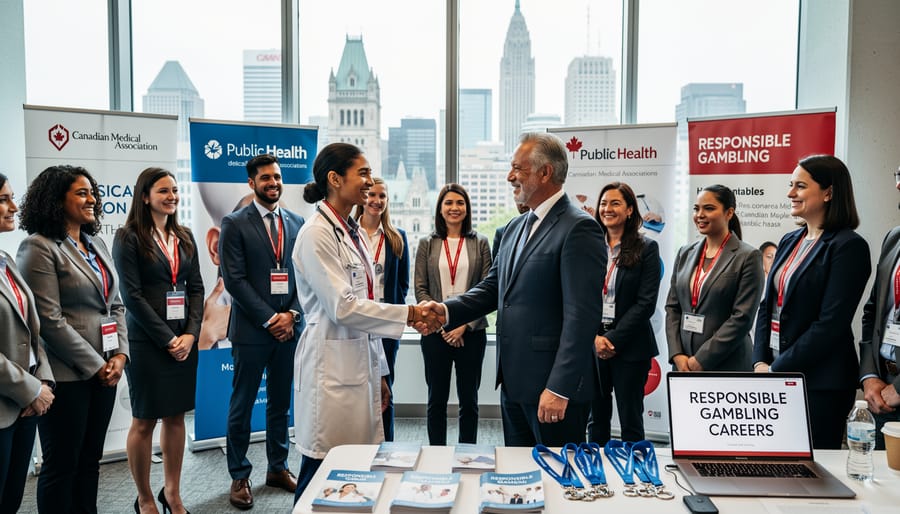
Building meaningful professional connections is essential for IMGs entering the responsible gambling and public health field in Canada. Start by joining the Canadian Medical Association (CMA) and provincial medical associations, which offer IMG-specific networking events and mentorship programs. These organizations frequently host webinars and conferences where you can meet established professionals working in addiction medicine and public health.
Connect with public health networks such as the Canadian Public Health Association (CPHA), which provides resources specifically for newcomers to the field. Their addiction and mental health special interest groups often welcome IMGs seeking guidance. Additionally, organizations like HealthCareCAN and regional public health authorities maintain directories of professionals who volunteer as mentors.
IMG support organizations including the Association of International Physicians and Surgeons of Ontario (AIPSO) and similar provincial groups offer structured mentorship matching services. Many successful IMGs in public health roles credit their mentors with providing invaluable insights into navigating credentialing processes and understanding workplace culture.
Leverage LinkedIn to identify professionals working in responsible gambling roles at organizations like the Canadian Centre on Substance Use and Addiction. Don’t hesitate to request informational interviews—most professionals are genuinely supportive of IMGs and appreciate the diverse perspectives you bring to addressing gambling-related harms in Canada’s multicultural communities.
As Canada’s gambling landscape evolves with the expansion of online platforms, responsible gambling has emerged as a critical public health priority requiring dedicated expertise and innovative approaches. For international medical graduates, this presents a unique and timely opportunity to apply your medical training and cultural perspectives to an area where your contributions can create meaningful societal impact.
The growing recognition of gambling-related harms as preventable public health issues means that professionals with medical backgrounds are increasingly valued in this field. Your clinical training, understanding of addiction medicine, mental health expertise, and commitment to prevention align perfectly with the competencies needed to address this complex challenge. Whether you pursue roles in research, policy development, clinical intervention, or community education, you’ll find opportunities to leverage your skills while gaining valuable Canadian healthcare experience.
The journey may require additional credentialing or bridging programs, but many IMGs have successfully navigated this path, finding professionally rewarding careers that don’t always demand full medical licensure. These roles offer competitive compensation, meaningful work-life balance, and the satisfaction of protecting vulnerable populations from gambling-related harms.
We encourage you to actively explore positions with provincial health authorities, research institutions, regulatory bodies, and addiction services organizations. Connect with mentorship programs supporting IMGs, attend public health conferences focused on addiction, and reach out to professionals already working in this space. Your unique perspective as an IMG, combined with passion for public health, positions you to make invaluable contributions to responsible gambling initiatives across Canada. Take that first step today—your future patients and communities need your expertise.