

The Ontario Immigrant Nominee Program offers international medical graduates a direct route to permanent residency in Canada, but if you’re planning to apply in 2026, you need to understand that the entire system just changed. On June 26, 2026, Ontario scrapped its eight previous immigration streams and introduced a single new Ontario Workforce Priority stream, which means the Expression of Interest system you may have researched is now closed. The new EOI portal is expected to reopen later this summer with different criteria and processes.
For IMGs, this timing matters profoundly. Permanent residency status determines whether you can access CaRMS (the Canadian residency matching system), pursue full medical licensure, and practice independently in Ontario. While Canadian medical practice evolved over decades to create structured pathways for international graduates, immigration status remains the gatekeeper. Without PR or citizenship, even highly qualified physicians face significant barriers to entering residency programs or obtaining unrestricted licenses.
The program redesign creates both uncertainty and opportunity. If you submitted an application before June 26 under the old framework, your file will be assessed using the previous eligibility rules. But if you’re preparing to apply now, you’ll need to work within the new single-stream structure. This guide walks you through the updated OINP process specifically from an IMG perspective, explaining what prerequisites you need, how to position your application once the portal reopens, and how to connect your nomination to your ultimate goal of practicing medicine in Ontario. Understanding these mechanics now, before the summer portal launch, gives you time to gather documentation and meet eligibility requirements.
Why OINP Matters for International Medical Graduates
The PR-Residency Connection
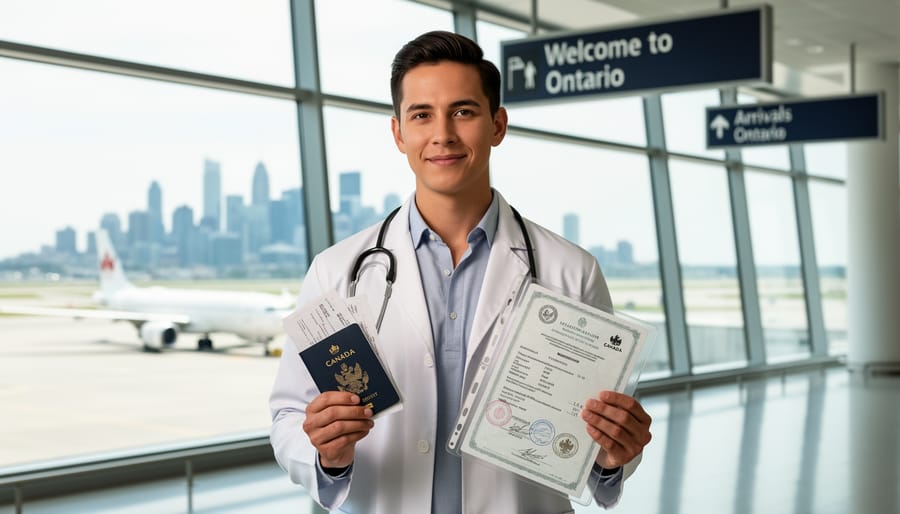
Most Canadian residency programs set a clear requirement that candidates must be a citizen or permanent resident to be eligible for matching. This isn’t a soft preference. It’s a hard barrier that excludes IMGs on temporary work permits or study permits from the residency match process, regardless of their qualifications or exam scores.
Without PR status, you’re essentially locked out of the pathway to specialty training and independent practice in Canada. You can write the MCCQE exams and complete assessments, but you can’t compete for residency positions. The Ontario Immigrant Nominee Program removes that barrier by providing a direct route to permanent residency specifically designed for workers contributing to Ontario’s economy, including healthcare professionals.
This is why integrating IMGs into the Canadian physician workforce requires addressing immigration status first. PR isn’t just one factor among many in your medical career plan. It’s the prerequisite that unlocks access to residency training, full licensing through the College of Physicians and Surgeons of Ontario, and ultimately the ability to practice independently as a physician in Canada.
Provincial Licensing Requirements
The College of Physicians and Surgeons of Ontario (CPSO) maintains strict immigration requirements that directly impact your licensing timeline. Most registration categories require PR or Canadian citizenship before you can complete the licensing process, though limited exceptions exist for specific visa types.
This creates a practical sequence: secure PR through OINP first, then pursue full CPSO registration. Without permanent residency, you’ll face restricted licensing options that limit your ability to practice independently or access most residency positions. The Canadian healthcare system’s regulatory framework ties immigration status to practice rights at multiple levels.
The CPSO evaluates your medical credentials separately from your immigration status, but both must align for unrestricted licensure. You can begin certain pre-application steps (credential verification, exam registration) while your OINP application progresses, but final licensing approval typically requires proof of PR. This intersection means timing your OINP application strategically can prevent delays in your medical career progression, particularly when coordinating with residency match cycles or exam scheduling.
What You Need Before Applying to OINP
Before you start the OINP application process, you need a complete file of credentials and supporting documents. Missing even one critical piece can delay your application by months or disqualify you entirely, so assemble everything before the portal reopens.
Your Educational Credential Assessment is the foundation. You’ll need an ECA from a designated organization, World Education Services (WES) and the Medical Council of Canada are the most common for IMGs, that confirms your medical degree is equivalent to a Canadian credential. Order this immediately if you haven’t already; processing takes four to six weeks, sometimes longer if your medical school is in a country with slower transcript verification.
Language proficiency must be current and meet minimum thresholds. OINP accepts CELPIP, IELTS, or TEF Canada results, but these expire after two years, so verify your test date. Most healthcare streams require CLB 7 or higher across all four abilities (reading, writing, listening, speaking). If your scores are borderline or expired, retake the test now rather than gambling on an extension.
You’ll need proof of Canadian work experience or a valid job offer in an eligible occupation. For IMGs, this often means documentation from a bridging program placement, clinical fellowship, or research position. The job offer must be full-time, permanent or at least one year in duration, and from an Ontario employer. Get a detailed letter on company letterhead that specifies your job title, duties, salary, and start date.
Work experience documentation should include reference letters from previous employers, pay stubs, and employment contracts covering at least 12 months of relevant experience. If you’ve worked in multiple provinces or countries, gather documentation for each position; OINP may request verification of your entire work history.
Here’s your complete checklist of materials to gather now:
- Educational Credential Assessment (ECA) from WES, MCC, or another designated organization
- Language test results: CELPIP, IELTS, or TEF Canada scores valid within two years
- Valid job offer or current employment in an eligible occupation in Ontario
- Proof of work experience: reference letters, contracts, and pay stubs covering at least 12 months
- Passport and travel documents: current passport with at least six months validity
- Settlement funds documentation: bank statements showing you can support yourself and dependents
Don’t overlook settlement funds. Even with a job offer, you must demonstrate financial capacity to establish yourself in Ontario. The exact amount varies by family size, but plan to show liquid assets, savings accounts, not property or investments you can’t quickly access, covering at least three to six months of living expenses.
Create digital copies of everything in PDF format, clearly labeled by document type and date. When the E-Filing Portal reopens later this summer, you’ll need to upload these files quickly, and scrambling to scan documents at the last minute invites errors. Organize a master folder now, verify that each file is legible and complete, and keep both digital and physical copies in a secure location.

Important Changes to OINP in 2026: What IMGs Must Know
On June 26, 2026, Ontario implemented sweeping regulatory changes to Ontario Regulation 422/17 under the Ontario Immigration Act, 2015, fundamentally restructuring how the OINP operates. The Ministry of Labour, Immigration, Training and Skills Development eliminated the previous eight-stream framework and introduced a single consolidated pathway: the Ontario Workforce Priority stream. For IMGs navigating the immigration landscape, this represents both a significant disruption and an opportunity to understand a streamlined approach from the outset.
The most immediate impact is operational. The Expression of Interest system that managed applications under the former framework has closed to new EOIs, and no further invitations will be issued under any of the previous streams. If you were researching OINP in early 2026 and bookmarked information about the Human Capital Priorities stream or the Employer Job Offer categories, those pathways no longer exist as separate application routes.
This transition period creates two distinct groups of applicants. If you submitted an application under the old framework before June 26, 2026, your file will be assessed according to the eligibility requirements that were in place when you applied. Your application continues through the previous system’s criteria and processing pathway. However, if you’re planning to apply now or haven’t yet submitted an EOI, you’ll be entering through the new Ontario Workforce Priority stream once the portal reopens.
The practical reality for IMGs is straightforward: you cannot submit a new application until the E-Filing Portal relaunches later this summer, and when it does, you’ll be working with a completely different stream structure than what older online guides describe. The shift to a single stream doesn’t necessarily mean fewer opportunities, but it does mean the selection criteria, documentation requirements, and application process will differ from what previous applicants experienced. Use this waiting period to ensure your credentials, language tests, and job-related documentation are current and ready for the new system.
Step-by-Step: How to Apply Through the New OINP Framework
Monitoring the Portal Reopening
The Ontario government has announced that the E-Filing Portal will reopen later this summer, but no specific date has been set. To catch the launch immediately, bookmark the official OINP website at and check it weekly. The Ministry of Labour, Immigration, Training and Skills Development posts all program updates there first, including the exact date when the new Ontario Workforce Priority stream EOI system becomes available.
Sign up for email alerts through the OINP portal if that option becomes available during the transition. Follow the Ministry’s official social media channels for announcements, but verify any information you see there by cross-checking the main website. Immigration consultants and online forums often share rumors about reopening dates, ignore these unless confirmed on .
Don’t wait passively. While monitoring for the reopening, use this time to gather your documents, confirm your credential assessment is current, and ensure your language test results are valid. The moment the EOI system opens, you’ll want to submit quickly, since processing order may matter under the new framework.
Preparing Your Expression of Interest
Your Expression of Interest will be the first impression you make under the new Ontario Workforce Priority stream. While we’re still awaiting the launch of the new EOI system later this summer, you can prepare now by gathering the right information.
Start with your core credentials: educational qualifications, language test results (IELTS or CELPIP scores), and detailed work history. For IMGs, this means having your Medical Council of Canada Evaluating Examination (MCCEE) results, Educational Commission for Foreign Medical Graduates (ECFMG) certification if applicable, and any Canadian medical assessments ready.
Document your ties to Ontario meticulously. If you have a job offer from an Ontario healthcare facility, even for a clinical observer or assessment program position, that strengthens your profile. Compile proof of any Ontario-based training, volunteer work at hospitals, or professional connections.
Be precise with dates and details. The new system will likely use a points-based ranking, so accuracy matters. Double-check that your current work permit details match exactly what you’ll enter in the EOI.
Prepare a clear employment history that shows progression and relevance to your medical career goals. Generic descriptions won’t help you stand out among other healthcare professionals competing for limited invitations.
Submitting Your Application
Once you receive an invitation to apply under the new Ontario Workforce Priority stream, move quickly, you’ll have a limited window to submit your complete application. Log into the E-Filing Portal using the credentials you created during the EOI phase and follow the step-by-step prompts carefully. The portal will guide you through uploading mandatory documents: your educational credential assessment, language test results, job offer letter (if required for your stream category), proof of work experience, and identity documents. Double-check that all files are clearly labeled, current, and in the accepted formats, incomplete submissions get rejected outright.
Pay close attention to field-by-field requirements as you fill out each section. Small discrepancies between your EOI profile and your full application can trigger delays or requests for clarification. For example, if your job title or NOC code differs slightly from what you initially entered, explain the reason in the optional comments field rather than leaving it unexplained. Review every page before final submission, because once you hit “submit,” you typically cannot edit core details. Keep a complete copy of your application and all uploaded documents for your records, as you’ll need them during the federal PR stage and when coordinating with the College of Physicians and Surgeons of Ontario for licensing.
Understanding Assessment Criteria
Understanding how your OINP application will be evaluated is essential for setting realistic expectations during this transition period. Under the current regulatory framework, any application you submit will be assessed against the eligibility criteria that were in effect on the date you submitted your complete application, not the rules announced later or those that applied when you first created an Expression of Interest.
This principle matters particularly now, given the June 26, 2026 program redesign. If you submitted an application under one of the former eight streams before the changes took effect, your file will be reviewed using those original requirements, even though those streams no longer accept new applicants. Conversely, once the new Ontario Workforce Priority stream opens later this summer, applications submitted through that pathway will be judged by the new framework’s criteria.
For IMGs, this means you cannot assume that eligibility factors like qualifying occupations, point thresholds, or work experience requirements will remain static. Review the specific requirements published at the time you’re ready to apply, rather than relying on outdated guidance or unofficial interpretations.
Critical Warnings and Common Pitfalls for IMGs
The redesigned OINP framework creates new traps for IMGs who assume the old guidance still applies. Most application failures stem from preventable errors, and understanding these pitfalls saves months of lost time.
The most common mistake is applying with incomplete credential recognition. Medical Council of Canada (MCC) assessments take four to six months under normal conditions, yet some IMGs submit OINP applications before receiving their evaluation results. This premature submission almost always leads to rejection because assessors can’t verify your medical qualifications match Canadian standards.
Timing your work permit expiry against OINP processing creates serious risk. Some IMGs assume they can remain in Canada on implied status while waiting for a nomination, but immigration status gaps can disqualify you from residency matching even if you eventually receive PR. Start your OINP process at least eighteen months before your current work authorization expires.
Job offer requirements trip up many applicants. The offer must be permanent and full-time, which excludes most locum positions and contract work arrangements common in healthcare. Your employer must also demonstrate genuine intent to retain you after you receive PR, not just provide a letter to support your application. Ontario has tightened scrutiny of job offers following past abuse of the system.
Bridging program timing poses another coordination challenge. Enrolling in a clinical assessment program while your OINP application is in progress can change your employment status and work permit conditions. These changes may invalidate the job offer or work experience claims in your original submission, forcing you to withdraw and reapply under different criteria.
Finally, don’t ignore the June 2026 regulatory changes. Eligibility requirements under the new Ontario Workforce Priority stream will differ from the previous framework. What qualified you six months ago may not meet current standards, so verify requirements at the time you’re ready to submit rather than relying on outdated information.
After Nomination: Verifying Your Progress and Next Steps

Confirming Your Nomination
Once OINP approves your application, you’ll receive a nomination certificate through the E-Filing Portal. This official document confirms Ontario’s nomination and provides a unique nomination number you’ll need for your federal PR application. Download and save multiple copies immediately, you cannot proceed to IRCC without this certificate.
Check your portal account and registered email daily after submission. Nomination certificates typically arrive as PDF attachments with detailed instructions for next steps. The certificate includes your personal information, nomination date, and expiry timeline for submitting your federal application (usually 6 months from issuance). Verify all details match your application exactly before proceeding to the federal stage.
The Federal PR Application Process
Once OINP issues your provincial nomination, you’ll receive a formal nomination certificate and detailed instructions for the next phase. Within this package, you’ll find a nomination number that you must enter into your federal Express Entry profile if you applied through an Express Entry-aligned stream.
Log into your IRCC account and update your profile to reflect the nomination. This action adds 600 points to your Comprehensive Ranking System score, virtually guaranteeing an Invitation to Apply for permanent residence in the next draw. You’ll then have 60 days to submit a complete federal PR application through the IRCC portal.
Gather all required federal documents: police certificates from every country where you’ve lived for six months or more since age 18, updated medical exams from an IRCC-approved panel physician, proof of funds, and all supporting immigration forms. The medical exam is particularly important for IMGs, schedule it promptly, as results expire after 12 months.
IRCC currently processes most provincial nominee applications within six months, though timelines vary. During this period, maintain valid work permit status if you’re already in Canada and keep your contact information current in the portal. You’ll receive updates at key milestones: when your application enters processing, when additional documents are needed, and when a final decision is made.
Leveraging OINP Success for Medical Licensing and Residency
Securing permanent residency through OINP opens immediate doors that were previously closed to you as an IMG. With your PR status confirmed, you can now register for the National Assessment Collaboration (NAC) examination and the Medical Council of Canada Qualifying Examination (MCCQE) Part I without waiting periods. Many IMGs schedule these exams within weeks of receiving their Confirmation of Permanent Residence, creating momentum in their licensing timeline.
Your new status makes you eligible for Canadian residency matching through CaRMS. Most programs require PR or citizenship at the time of application, so your OINP success removes this barrier. Start building relationships with program directors and attending physicians at Ontario teaching hospitals immediately. Shadow opportunities and clinical observerships become more accessible once you have PR, and these connections often translate into strong reference letters for your residency applications.
Register with the College of Physicians and Surgeons of Ontario (CPSO) to begin the supervised practice pathway if you haven’t already. Your PR status accelerates this process, as you can now apply for full educational licenses required for residency positions. Some IMGs use this transition period to complete specialist training certificates or bridging programs that strengthen their residency applications.
Connect with IMG mentorship networks in Ontario. Organizations like HealthForceOntario and the Ontario Medical Association maintain mentorship programs specifically designed to guide newcomers through the licensing and residency application process. These mentors understand the unique challenges you face and can provide strategic advice on timing your exams, selecting programs, and navigating interviews.
Document everything: keep copies of your OINP nomination, PR confirmation, exam results, and clinical experiences organized. Residency program directors value candidates who demonstrate clear progression and preparation, and your immigration success story shows determination and planning.
Frequently Asked Questions About OINP for IMGs
When will the new Ontario Workforce Priority stream open?
The Ontario Workforce Priority stream Expression of Interest system is anticipated to open later in the summer of 2026, following the June 26, 2026 regulatory changes. Monitor the official E-Filing Portal and OINP website for the exact reopening date and application instructions.
What happened to my application under the old streams?
All applications received before the June 26, 2026 redesign will be assessed according to the eligibility requirements that were in place at the time you submitted your application. The Expression of Interest system is now closed to new EOIs, and no further invitations will be issued under the former 8 streams.
Can I apply to OINP while on a work permit?
Yes, you can apply while on a valid work permit, and many IMGs do so while working in bridging programs or clinical assistant positions. Having a job offer from an Ontario employer strengthens your application profile.
Do I need a job offer in my medical specialty?
A job offer in healthcare demonstrates Ontario ties and employment prospects, but it doesn’t need to be in your exact specialty since you’ll be entering residency training. Positions in bridging programs, research roles, or clinical assistant work all strengthen your application while you prepare for licensing exams.
Can I apply to residency programs while my OINP is in process?
Most Canadian residency programs through CaRMS require permanent residency or citizenship by the time you would start training. Submit your OINP application early to ensure PR approval before residency match deadlines, typically 12-18 months before your intended start date.
Beyond these procedural questions, IMGs often wonder how OINP fits into the broader context of medical practice in Canada. Understanding this program as one component of your pathway helps you coordinate immigration, licensing, and career planning. The integration of administrative processes with clinical preparation, including familiarity with technology in healthcare used across Ontario’s medical systems, positions you for a smoother transition once you receive nomination.
Processing times vary based on application volume and completeness, but you should factor in several months from EOI submission to nomination, plus additional time for the federal PR application through IRCC. Start your OINP process as early as possible relative to your licensing exam schedule and residency application timeline. Provincial nomination adds 600 points to your Express Entry profile, making PR approval highly likely, but don’t wait until the last minute to begin.
If you’re coordinating OINP with CPSO licensing requirements, remember that your Medical Council of Canada Qualifying Examination results and language test scores serve double duty for both immigration and licensing. Keep certified copies of all credentials, maintain detailed records of your clinical experience, and document any Ontario healthcare employment carefully. These materials support both your OINP application and your eventual residency applications, so organize them systematically from the start.
The Ontario Immigrant Nominee Program stands as one of the most direct pathways for international medical graduates to build sustainable careers in Canada’s healthcare system. While the June 2026 redesign has introduced a transition period with temporary uncertainty, the underlying promise remains unchanged: provincial nomination dramatically accelerates your journey from aspiring physician to practicing resident.
The closure of the previous eight streams and the introduction of the Ontario Workforce Priority framework represent strategic improvements designed to better match qualified healthcare professionals with Ontario’s urgent workforce needs. Yes, waiting for the E-Filing Portal and new EOI system to launch later this summer requires patience, but this redesign ultimately creates clearer, more streamlined pathways for IMGs like you.
Your path from nomination to residency matching to medical practice is achievable. Hundreds of international medical graduates have successfully navigated OINP to secure permanent residency, complete licensing requirements, and match into competitive residency programs across Ontario. You’re not alone in this journey. Our platform connects you with mentors who’ve walked this exact path, resources tailored to your immigration and medical licensing needs, and a community that understands the unique challenges IMGs face. The regulatory changes of 2026 mark a new chapter, not a closed door.