

Canada’s healthcare system is publicly funded, universal, and primarily administered by each of the 13 provinces and territories. The system provides medically necessary hospital and physician services to all permanent residents at no direct cost at the point of care, funded through general taxation rather than private insurance premiums. For international medical graduates, understanding this framework is essential because it shapes everything from how you’ll be compensated as a physician to how patients access your services and what barriers you might encounter during licensure.
Unlike private insurance models in many other countries, Canadian healthcare operates on a single-payer system where provincial governments negotiate fee schedules directly with physicians. This means your income will typically come from billing the provincial health plan rather than collecting payments from individual patients or multiple insurance companies. While this creates predictable revenue streams, it also means navigating provincial variations in billing codes, payment schedules, and practice restrictions.
The system’s public nature creates both opportunities and challenges for IMGs. On one hand, physician shortages across the country have opened pathways for internationally trained doctors to fill critical gaps, particularly in rural and underserved communities. On the other, the publicly funded model means strict regulatory oversight, comprehensive assessment requirements, and intense competition for residency positions and practice licenses.
Understanding these fundamentals gives you a realistic picture of the healthcare environment you’ll enter. Canada’s approach prioritizes equity and accessibility, which translates into collaborative care models, emphasis on primary care gatekeeping, and growing integration of technology to serve dispersed populations. As you work toward practicing here, these system characteristics will influence your training pathway, practice location options, and daily clinical decisions.
How Canadian Healthcare Is Funded and Organized

Provincial and Territorial Variations
Canada’s healthcare system operates under thirteen distinct provincial and territorial governments, each with its own health ministry, fee schedules, and administrative processes. This decentralization means that your experience as a physician can differ significantly depending on where you practice.
Ontario uses a primarily fee-for-service model through the Ontario Health Insurance Plan (OHIP), with established billing codes and rates negotiated between the Ontario Medical Association and the provincial government. British Columbia operates similarly through the Medical Services Plan (MSP), though BC has increasingly adopted alternative payment models like salary arrangements in community health centers. Alberta’s system tends to offer higher fee schedules in certain specialties, particularly to attract physicians to rural communities. Quebec presents unique considerations with its distinct language requirements and a compensation structure that differs notably from other provinces.
These variations extend beyond payment. Some provinces require you to maintain a minimum patient roster for family practice, while others focus on service volume. Malpractice insurance requirements and costs vary by province. Billing software compatibility, electronic health record systems, and prescription databases differ across jurisdictions. Even something as fundamental as which diagnostic tests are covered under public insurance varies provincially.
For IMGs, these differences matter practically. The province where you complete your residency often influences where you’ll initially practice, as you become familiar with that specific system’s billing codes, referral pathways, and administrative requirements. Some provinces actively recruit IMGs through incentive programs, return-of-service agreements, or streamlined licensing pathways. Understanding these variations helps you choose locations that align with your career goals, practice preferences, and compensation expectations.
Universal Coverage: What It Includes and What It Doesn’t
Canada’s universal healthcare coverage centres on a foundational principle: medically necessary hospital and physician services cost patients nothing at point of care. When a patient visits a hospital emergency department, gets admitted for surgery, or sees a doctor for a consultation, they won’t receive a bill. Provincial health insurance plans cover these services entirely.
However, “universal” doesn’t mean “comprehensive.” The publicly funded system has clear boundaries that shape daily medical practice.
What’s Covered
Hospital services include diagnostic tests, surgeries, emergency care, and inpatient stays. Physician services encompass consultations, examinations, and procedures performed in hospitals, clinics, or offices. Laboratory tests and most medical imaging ordered by physicians fall under provincial coverage. Obstetrical care, mental health services provided by physicians, and chronic disease management are all publicly funded.
What’s Typically Not Covered
Prescription medications dispensed outside hospitals represent the most significant gap. Patients fill outpatient prescriptions through private insurance, employer plans, or out-of-pocket payment. Some provinces offer drug coverage programs for seniors, low-income residents, or those with catastrophic medication costs, but approaches vary widely.
Dental care sits almost entirely outside public coverage except for specific hospital-based procedures. Routine cleanings, fillings, and orthodontics require private payment or insurance. Vision care follows a similar pattern, eye exams and corrective lenses aren’t covered for most adults, though some provinces include children and seniors. Physiotherapy, chiropractic care, massage therapy, and most complementary medicine remain private expenses.
Cosmetic procedures, elective surgeries for aesthetic purposes, and medical notes for employers or insurance companies all generate patient fees.
Practice Implications
These coverage gaps shape patient conversations daily. You’ll frequently discuss medication costs with patients, sometimes adjusting prescriptions based on affordability. Referrals to dental specialists or physiotherapists come with the understanding that patients face direct costs. Many patients carry supplemental private insurance through employers, creating a two-tier system for services beyond the core public coverage.
Healthcare Access and Wait Times: The Reality
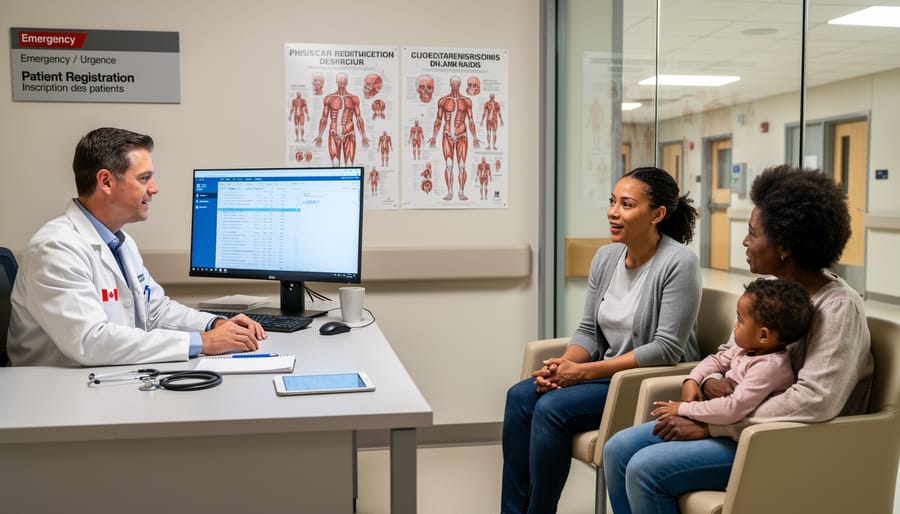
Wait times are a reality in Canadian healthcare, but understanding the nuances helps IMGs set realistic expectations and communicate effectively with patients. Emergency departments operate on a triage system that prioritizes life-threatening conditions immediately, while less urgent cases may wait several hours. Urgent care receives prompt attention, but elective procedures and specialist consultations face longer queues, sometimes weeks or months depending on specialty and province.
The system prioritizes based on medical necessity rather than order of arrival. A patient with chest pain gets seen before someone with a sprained ankle, regardless of who arrived first. For non-emergency specialist referrals, wait times vary considerably. A dermatology consultation for suspected melanoma might be scheduled within days, while a non-urgent orthopedic assessment for chronic knee pain could take several months. Geography matters too: rural areas often have shorter wait times for some services due to smaller patient volumes, though accessing certain specialists may require traveling to urban centers.
As an IMG practicing in Canada, you’ll play a crucial role in managing patient expectations about wait times. Clear communication about realistic timelines helps patients understand the system isn’t ignoring them. When referring to specialists, explaining why the referral is urgent or can wait helps patients contextualize their position in the queue. Many physicians develop relationships with specialists to facilitate faster consultations when clinically warranted, and understanding the triage criteria allows you to prioritize appropriately.
The reality is more nuanced than headlines suggest. While wait times exist, emergency care remains accessible, and the triage system ensures serious conditions receive timely attention. Your role involves balancing thorough care with efficient resource use, advocating for patients when delays pose clinical risks, and helping them navigate a system designed to serve everyone equitably.
The Role of Family Physicians and Specialists
Team-Based Care Models
Canadian physicians rarely work in isolation. Most practice within collaborative teams where nurse practitioners, registered nurses, pharmacists, dietitians, social workers, and mental health counsellors contribute their specialized expertise to patient care. This interprofessional approach addresses the complexity of modern healthcare more effectively than any single provider could alone.
Family Health Teams (FHTs) represent Ontario’s most established team-based model, bringing together family physicians with allied health professionals who share patient rosters and coordinate care through unified electronic records. British Columbia’s Primary Care Networks and Alberta’s Primary Care Networks follow similar principles but operate under provincial variations in funding and governance. These structures allow you to focus on tasks requiring physician expertise while other team members handle patient education, chronic disease management, and preventive care coordination.
Community Health Centres (CHCs) serve populations facing access barriers, including newcomers, low-income individuals, and marginalized communities. CHCs typically employ salaried physicians alongside community health workers, Indigenous healing practitioners in some locations, and culturally specific support services. For IMGs, CHCs offer structured environments with mentorship, regular hours, and mission-driven work that often aligns with values around equitable care.
Nurse practitioners hold expanded scopes including diagnosis and prescribing authority in all provinces, which means you’ll collaborate with them as colleagues rather than supervise them. Understanding these roles and respecting each profession’s scope creates smoother teamwork and better patient outcomes in your Canadian practice.
Physician Compensation Models in Canada

Understanding how physicians are paid in Canada is crucial for IMGs planning their careers. Unlike some countries with a single payment model, Canada uses several approaches that vary by province and practice setting.
The most common compensation model is fee-for-service, where physicians bill provincial health insurance plans for each service provided. You submit claims using specific billing codes from your province’s fee schedule, a detailed list that assigns dollar amounts to procedures, consultations, and other services. A routine office visit might be billed at $30-40, while a complex consultation could reach $150-200, depending on the province. This model offers flexibility and the potential for higher earnings with increased patient volume, but it requires administrative work and can incentivize quantity over quality.
Salary models are increasingly common, particularly in hospitals, community health centres, and academic settings. You receive a fixed annual income regardless of patient numbers, which provides predictable earnings and eliminates billing responsibilities. Many IMGs find salaried positions attractive for work-life balance, though the income ceiling is typically lower than high-volume fee-for-service practices.
Capitation means you receive a set amount per enrolled patient per year, regardless of how often they visit. This model works well in family practice with stable patient panels and encourages preventive care. Some provinces offer enhanced capitation rates for complex patients or comprehensive care.
Blended models combine elements, perhaps a base salary plus fee-for-service payments, or capitation with bonuses for specific services. These arrangements are designed to balance income security with productivity incentives.
| Model Type | How It Works | Advantages | Typical Settings |
|---|---|---|---|
| Fee-for-Service | Paid per service using provincial fee schedules | Higher earning potential, practice autonomy | Private clinics, solo practices |
| Salary | Fixed annual income | Predictable earnings, no billing admin | Hospitals, CHCs, academic positions |
| Capitation | Set amount per enrolled patient yearly | Encourages comprehensive care, stable income | Family Health Teams, rostered practices |
| Blended | Combination of above models | Income security plus incentives | Group practices, FHTs, rural programs |
Your compensation model often connects to practice location. Rural and remote areas frequently offer blended models with guaranteed minimum incomes, recruitment bonuses, and retention incentives. Urban practices lean toward traditional fee-for-service or salaried hospital positions. As you plan your career path, consider which model aligns with your financial goals, desired patient relationships, and administrative tolerance.
Technology and Electronic Health Records
Canada’s health technology landscape in 2026 reflects a patchwork of provincial systems at varying stages of digital maturity. Unlike countries with centralized electronic health record (EHR) platforms, Canada operates multiple provincial and territorial systems that don’t always communicate seamlessly with each other.
Most provinces now have electronic medical record systems in place for primary care and hospital settings, but the specific platforms vary. Ontario uses systems like EPIC in many hospitals, while British Columbia relies on its CareConnect platform. You’ll find that some practices still use paper charts alongside digital records, particularly in smaller communities or older clinics.
E-prescribing has become standard in most urban centres, allowing you to send prescriptions directly to pharmacies. This reduces errors and improves medication tracking, though you’ll need to familiarize yourself with the specific software your practice or hospital uses.
One practical challenge you’ll encounter: patient records don’t automatically follow patients across provincial borders. A patient moving from Alberta to Nova Scotia essentially starts fresh in terms of accessible digital health history. Within provinces, information sharing between family physicians and specialists has improved, but expect some gaps depending on which systems your colleagues use.
The good news? Training and technical support are typically provided when you join a practice or hospital. Most provinces also offer EMR incentive programs or subsidies for physicians, particularly those practicing in rural areas. While Canada’s health IT infrastructure isn’t as unified as some IMGs might expect from their home countries, it’s functional and gradually improving through provincial interoperability initiatives.
Where IMGs Fit in the Canadian Healthcare Landscape

International medical graduates represent a vital and growing segment of Canada’s physician workforce. Currently, IMGs comprise approximately one quarter of all licensed physicians practicing across the country, delivering essential care in communities from coast to coast. This substantial presence reflects not just workforce needs, but the genuine value IMGs bring through diverse training perspectives and commitment to patient care.
Your contributions matter most in areas facing physician shortages. Rural and remote communities particularly benefit from IMG expertise, with many smaller towns relying heavily on internationally trained doctors to maintain healthcare access. Northern Ontario, rural Saskatchewan, Atlantic provinces, and British Columbia’s interior regions have all welcomed IMGs who’ve chosen to build rewarding practices serving underserved populations.
Specialty shortage fields also offer strong opportunities. Family medicine remains the most accessible pathway, but Canada actively recruits IMGs in psychiatry, anesthesiology, general surgery, and internal medicine subspecialties where demand exceeds domestic graduate supply. Provincial programs recognize these gaps and structure IMG-friendly residency positions accordingly.
Success stories abound throughout the system. IMGs lead hospital departments, teach medical students, conduct research, and serve as regional healthcare leaders. Many who initially accepted rural positions to gain entry have stayed long-term, finding professional satisfaction and community connections that transformed temporary placements into fulfilling careers.
The integration pathway has challenges, but the destination is clear: Canada needs your skills and welcomes physicians committed to meeting population health needs. Understanding this landscape helps you position yourself strategically and recognize that your international training isn’t just accepted, it’s genuinely valued within the Canadian healthcare system.
Common Questions About Canadian Healthcare Facts
Is healthcare in Canada really free?
Healthcare is publicly funded through taxes, not free. Residents don’t pay out-of-pocket for medically necessary hospital and physician services covered under provincial plans, but the system is supported by federal and provincial tax revenue.
Can patients choose their own doctor in Canada?
Yes, patients can choose their family physician and specialists, though availability varies by region. Some areas have physician shortages, leading to wait lists for accepting new patients, while other communities actively recruit doctors.
How does emergency care work?
Emergency departments operate on a triage system, treating patients based on medical urgency rather than arrival order. Life-threatening conditions receive immediate attention, while less urgent cases may experience longer wait times.
What about medical malpractice insurance?
Physicians in Canada must carry malpractice insurance, typically through the Canadian Medical Protective Association (CMPA). The CMPA provides medico-legal protection and is considered among the most robust systems globally, with membership required for most practice settings.
Do IMGs face barriers to practicing in Canada?
IMGs must complete specific IMG certification steps including credential verification, examinations, and residency training. While the pathway involves multiple requirements, thousands of IMGs successfully integrate into the Canadian healthcare system each year.
Are prescription medications covered?
Most prescription drugs outside hospital settings aren’t covered by provincial health plans. Many Canadians access medication coverage through employer health benefits, private insurance, or specific provincial programs for seniors and low-income residents.
Understanding these practical realities helps you set accurate expectations as you plan your medical career in Canada. The system balances universal access with fiscal sustainability, creating a healthcare environment distinct from both fully privatized models and some other public systems you may have encountered.
Provincial variations mean the specific answer to “how does this work?” often depends on where you practice. Ontario’s billing structure differs from British Columbia’s compensation model. Quebec operates partially in French. Rural Alberta offers different incentives than urban Toronto. Research the provinces where you’re considering practice to understand local nuances beyond these national characteristics.
Understanding these twelve essential facts about Canadian healthcare gives you a solid foundation for making informed career decisions. The publicly funded, provincially administered system creates a unique practice environment where universal access shapes daily clinical work, team-based models define collaboration, and varied compensation structures offer flexibility across different settings and locations.
For international medical graduates, these characteristics aren’t just background information, they directly influence your path forward. Knowing how provincial variations affect licensing requirements, where IMGs contribute most significantly, and what practice models exist helps you target opportunities that align with your goals and strengths.
The Canadian healthcare landscape values your training and experience, particularly in underserved communities and specialty shortage areas. Success here starts with thorough preparation: understanding the system you’ll work within, completing how to get certified through provincial medical regulatory authorities, and strategic residency career planning tailored to your specialty and preferred province.
Canadian Medical Careers connects IMGs with mentors who’ve successfully navigated this journey. These experienced physicians provide practical guidance on licensing, integration, and building sustainable practices within Canada’s universal healthcare framework. Your next step is clear: leverage these resources, deepen your knowledge of provincial requirements, and move confidently toward your Canadian medical career.